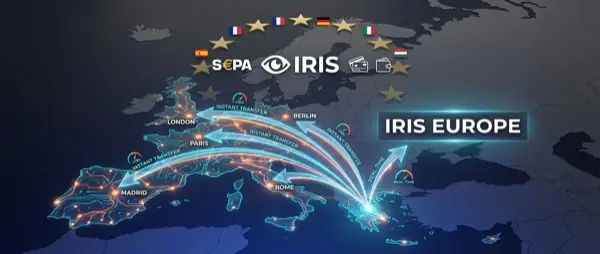


2026 marks a historic moment for European payments. As of January, all Eurozone banks are required to offer SEPA Instant Credit Transfer — instant money transfers in seconds, 24/7/365. For Greek consumers and businesses, this means the end of waiting “1–2 business days” and the start of a new era in transactions.
📖 Read more: IRIS Payment System Expands Across Europe Beyond Greece
💳 What is SEPA Instant?
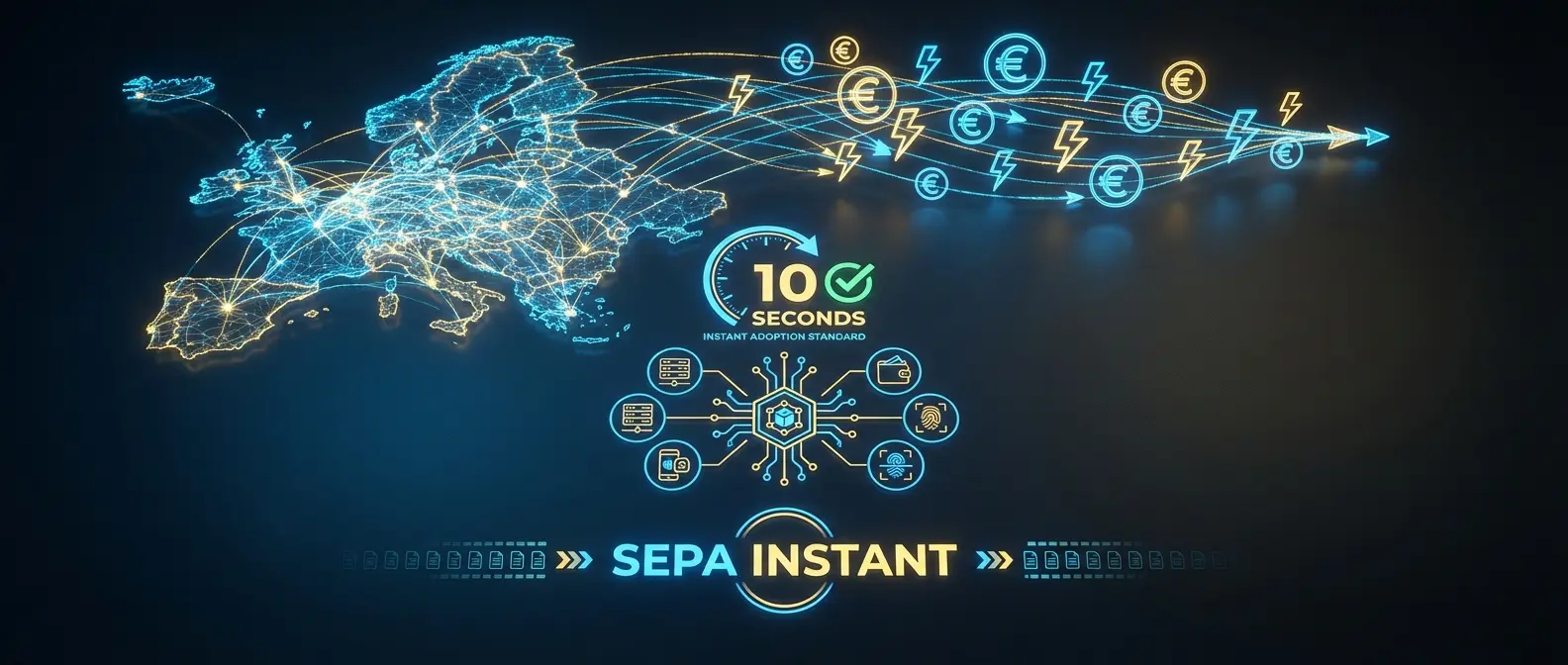
SEPA (Single Euro Payments Area) is the unified euro payments zone covering 36 European countries. Until recently, SEPA transfers took one business day to complete. With SEPA Instant Credit Transfer (SCT Inst), money reaches the recipient in less than 10 seconds.
The service operates around the clock, every day of the year — including weekends, holidays, and Christmas. The concept of a “business day” no longer applies. Sent money at 3 AM on New Year's Day? It arrives in 10 seconds.
10 sec.
Maximum transfer time
€100,000
Maximum amount per transaction
36
Participating countries
📜 The mandatory rollout of 2026
Until 2025, SEPA Instant was optional. Many banks — especially in Greece — did not offer it or charged high fees. The new Regulation (EU) 2024/886 changes everything: from January 2026, all banks that offer regular SEPA transfers are required to also offer instant transfers.
📖 Read more: Digital Euro Stalled: Brussels Political Deadlock in 2026
The most important part? Surcharges are prohibited. If your bank charges €0.50 for a regular SEPA transfer, it cannot charge more for instant. This essentially means regular transfers become obsolete — why wait a day when you can get the same result in 10 seconds for the same price?
📋 Implementation timeline
- January 2026: Mandatory receiving of instant transfers
- July 2026: Mandatory sending of instant transfers
- January 2027: Mandatory IBAN name verification

🏦 Greek banks in 2026
The four systemic banks — Alpha Bank, Eurobank, National Bank, Piraeus — have already fully implemented SEPA Instant. The transition was smooth, as they had started offering the service optionally since 2023.
The real change affects smaller banks and fintechs. Banks like Attica Bank, Optima Bank, and Pancreta Bank had to invest significantly in infrastructure. Neobanks like Revolut and Wise, operating in Greece, were already prepared — instant is in their DNA.
🏛️ Systemic Banks
Alpha, Eurobank, National Bank, Piraeus — full support with zero extra cost. Limits up to €100,000.
🏦 Smaller Banks
Attica, Optima, Pancreta — full support. Some with lower limits (€15,000).
📱 Neobanks
Revolut, Wise, N26 — instant from the start. Typically faster with a better UX.
🔄 What changes in everyday life
Think about how many times you've waited for a transfer. You paid the plumber on Friday, but the money arrived on Monday. You bought something from the Marketplace, but the seller waited for the payment to “land” before shipping. A restaurant bill was split, but someone said they'd “send it tomorrow.”
With SEPA Instant, all of that is a thing of the past. The transfer happens instantly, just like paying with cash. The plumber sees the money before leaving your house. The Marketplace seller knows immediately they've been paid. The bill is split on the spot.
📖 Read more: Stablecoin Payments: Without Banks in 2026
🏠 Rent
Paid on the 1st, credited on the 1st — not on the 2nd or 3rd
💼 Salaries
Employers can pay even on a Friday evening
🛒 E-commerce
Instant order confirmation, no waiting
🍽️ Split Bills
Split the check at the table, in seconds

🏢 What it means for businesses
For small and medium-sized businesses, SEPA Instant is a game-changer. Cash flow improves dramatically: payments from customers arrive instantly, enabling faster fulfillment of obligations to suppliers.
George, owner of an electrical supply shop in Thessaloniki, explains: "Before, when a customer paid by transfer, I had to wait until the next day to see the money and order materials. Now, I receive the payment, see it credited instantly, and place the order on the spot. I save an entire day."
Additionally, SEPA Instant reduces the need for POS terminals in certain cases. For services where payment happens at the end (plumbers, electricians, couriers), an instant transfer is just as fast as a card payment — and with no commission.
📖 Read more: Tap to Phone Payments Launch in Greece for Small Business
🔒 Security and Verification of Payee
A critical addition arriving in January 2027 is Verification of Payee (VoP). Before completing a transfer, the bank will check whether the name you entered matches the IBAN holder.
This will drastically reduce scams like “Hi, I'm your manager, send €5,000 to this IBAN.” If the IBAN doesn't belong to someone with your manager's name, you'll receive a warning. You can still proceed, of course — but you'll know something is off.
🛡️ Security layers
- SCA: Mandatory strong authentication (fingerprint, OTP)
- IBAN Validation: IBAN validity check
- VoP (2027): Beneficiary name verification
- Fraud Detection: AI-powered fraud detection systems
📊 Comparison with other payment methods
| Method | Time | Cost | Limit |
|---|---|---|---|
| SEPA Instant | 10 sec. | €0-0,50 | €100.000 |
| SEPA Regular | 1 business day | €0-0,50 | Unlimited |
| Card (POS) | Instant | 1-2% | Per bank |
| PayPal | Instant | 2-4% | Per account |
🔮 The future of payments
SEPA Instant is just the beginning. The European Central Bank is developing the Digital Euro — a digital currency that will combine the immediacy of instant transfers with the anonymity of cash.
Also coming are Request to Pay (RtP) — payment requests that the recipient approves with a single click. Instead of providing an IBAN and amount, the seller sends you a request and you simply tap “Pay.” Greece is expected to be among the first countries to fully implement this.